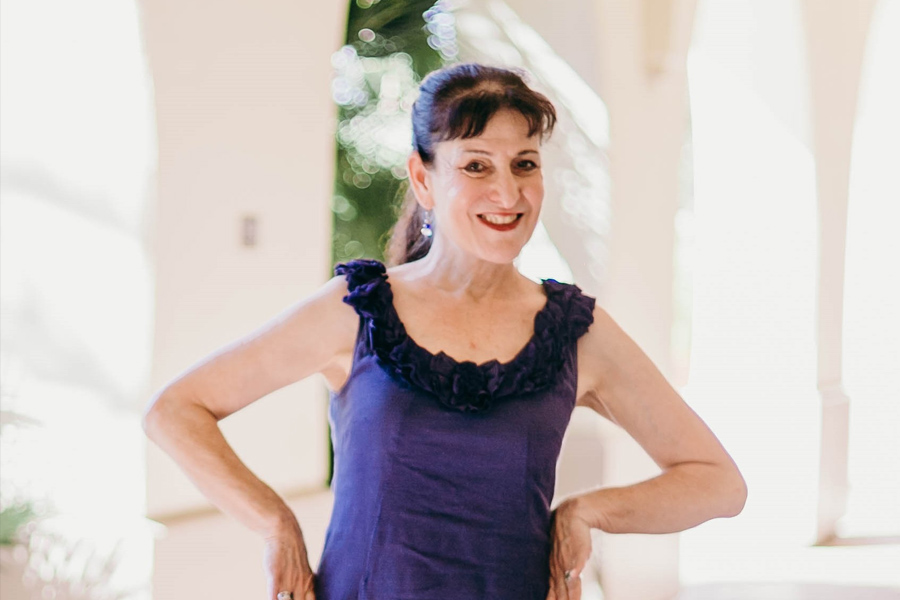
A Life Shaped by Teaching, Family, and Steady Purpose
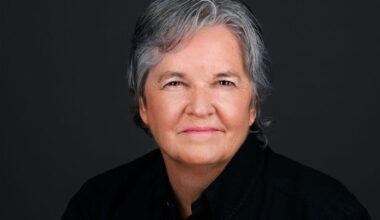
I think Marian Leibowitz is a figure history overlooks at first but unveils progressively, like a dimly lit photograph. She is most known as Jon Stewart’s mother, but that doesn’t do justice to her background in teaching, consulting, and family leadership. She is listed as a New Jersey schoolteacher, special education coordinator, and gifted education and curriculum development consultant.
Marian has a multigenerational family history. Laskin was her maiden name, and public records detail her Lower East Side Jewish immigrant family. Her father, Nathan Laskin, was born in Tianjin, China, giving her family history a wider scope than expected. Fannie Laskin was her mother. Those names show Marian wasn’t born out of nowhere. Her family was formed by migration, adaption, and American practicality.
Most public records link Marian to education. After teaching in NYC, she worked in NJ and became a consultant. Her 1980 interview as a special education coordinator arguing that exceptional education should not be treated as a distinct island is one of her most vivid professional images. That opinion reveals her thinking. She seems to have felt that learning should be expansive, not boxed in, and that children should be examined with care rather than categorized immediately.
Marian Leibowitz and Her Work in Education
Marian’s professional life was not flashy, but it was substantial. Publicly available information places her as president of the New Jersey Association of Learning Consultants and also as president of the state ASCD group, an organization tied to curriculum and supervision. Those roles suggest leadership, trust, and a reputation built over time. I read her career as one built less like a sudden tower and more like a well-laid road. Step by step, she moved from classroom work to influence.
Her expertise appears to have centered on special education and gifted education. She was identified as a coordinator for the Educational Improvement Center of Central New Jersey. In that role, she helped shape thinking around how schools should handle children with unusual abilities or special needs. That matters because educational systems often behave like blunt instruments. Marian seems to have preferred something finer, more flexible, more humane.
She also traveled widely for her work. Public accounts say she presented workshops in 27 states in one year. That is not the mark of someone hiding in the background. It suggests a woman who had ideas other educators wanted to hear. It suggests a voice that could travel. She also authored or contributed to several education-related works over the years, including titles associated with professional excellence, process learning, inquiry, and habits of mind.
There is even a paper trail showing consulting work under the name Marian Leibowitz Associates, with fees set for strategic planning. That detail matters because it tells me her expertise had practical value. Schools and organizations paid for it. Her thinking was not merely theoretical. It had market value, which in education often means people believed it could solve real problems.
The Family Around Marian Leibowitz
Marian’s family story is wide enough to hold public figures, business figures, and a few quiet names that matter in a different way.
Her former husband was Donald Leibowitz. Public reporting says they moved from New York City to New Jersey in 1960, a change connected to Donald’s work near Princeton. Their marriage later ended, and Donald remarried Karen Beck Leibowitz. That second marriage is part of the broader family structure, but Marian remains the mother at the center of the first household that shaped Jon Stewart.
Their children included Lawrence Leibowitz, often called Larry, and Jon Stewart, born Jonathan Stuart Leibowitz. Larry went on to become a Wall Street executive, including leadership at NYSE Euronext. Jon became the best-known public figure in the family, but Marian’s influence appears in the way people describe the household. She was the parent who supported his path when it still looked uncertain, which is often the true measure of family belief. A parent does not only prepare a child for success. Sometimes she protects the fragile possibility of it.
Donald Leibowitz’s later obituary also names Dan Leibowitz and Matthew Leibowitz, who appear to be Jon’s half-brothers from Donald’s later family, not Marian’s children. The family tree becomes broader there, with branches extending beyond Marian’s direct household. The obituary also lists grandchildren, including Nathan Stewart and Maggie Stewart, along with Eliana, Benjamin, and Abigail Leibowitz. Those names show that Marian is part of a multi-layered family network, not a simple headline.
The public story around Jon Stewart also includes Marian as a grandmother. That role is easy to miss, yet it adds another dimension to her life. It means her influence did not stop at one generation. Family memory tends to work like that. It does not stay in one room. It moves through children and grandchildren like light through windows.
A Timeline That Shows Her Pace and Reach
A few dates assist tell Marian’s narrative.
Marian and Donald relocated to NJ in 1960. Birth of Jon Stewart, 1962. Marian gave a professional interview about gifted and special schooling in 1980. The Celebration of Excellence in the Teaching Profession was her 1986 work. Another ASCD/ERIC education credit comes in 1997. She appeared on An ASCD Professional Inquiry Kit in 1999. She wrote about work ethic and mindset in 2000. Her consultancy name surfaced in school board strategic planning materials by the mid-2000s. The 2013 obituary of Donald Leibowitz listed familial names. Marian was photographed during Jon Stewart’s 2022 Mark Twain Prize event. As Jon Stewart’s family background gained notice in 2024, she earned a more extensive press profile.
That chronology lacks tabloid drama. Stronger than that. Shows continuity. It reveals a life that made an effect for decades without recognition.
What I Find Most Striking About Marian Leibowitz
What stands out most to me is the contrast between visibility and influence. Marian Leibowitz is not famous in the celebrity sense, yet she is woven into a nationally known family story. She was an educator who worked with difficult, important questions. She seems to have been the kind of professional who believed in structure without rigidity, excellence without snobbery, and children without shortcuts.
I also notice that her life reflects two spheres at once. One is private and familial, full of husbands, sons, grandchildren, and the ordinary weight of home. The other is professional, full of workshops, associations, publications, and consulting work. The two do not cancel each other out. They reinforce each other. Her family life and work life look like two hands of the same body, each doing different labor, both necessary.
FAQ
Who is Marian Leibowitz?
Marian Leibowitz is a New Jersey educator and educational consultant best known publicly as Jon Stewart’s mother. She was also involved in special education, gifted education, and curriculum work.
What was Marian Leibowitz known for professionally?
She was known for her work in education, especially special education and gifted education. She served in leadership roles, gave workshops in multiple states, and contributed to education publications and consulting projects.
Who are Marian Leibowitz’s family members?
Her former husband was Donald Leibowitz. Their children included Larry Leibowitz and Jon Stewart. Public records also connect Donald to later sons Dan Leibowitz and Matthew Leibowitz. Marian’s father was Nathan Laskin, and her mother was Fannie Laskin.
Is Marian Leibowitz still mentioned in public life?
Yes. She appears in recent writing about Jon Stewart’s family background and in public photo coverage from his Mark Twain Prize ceremony in 2022. Her name continues to surface because of both family history and her own professional legacy.
What makes Marian Leibowitz notable beyond being Jon Stewart’s mother?
Her own career matters. She worked in education for years, held leadership roles, spoke publicly about gifted education, and contributed to professional materials. Her influence was practical, thoughtful, and long lasting.