When I think about Edwin D. Nye, often known as Ned Nye, I see more than the father of Bill Nye. I see a man whose life was shaped by extraordinary hardship, quiet determination, and lifelong curiosity. His story stretches from the streets of Washington, D.C., to the battlefields of the Pacific, from prisoner of war camps to suburban family life, and ultimately to a lasting influence on science education that reached as far as Mars.
Although Edwin D. Nye rarely stood in the public spotlight, his experiences became the foundation for one of the most recognizable science communicators of the modern era. His life reminds me that history is often carried forward not only by famous figures but also by parents who inspire the next generation.
Early Life and Family Background
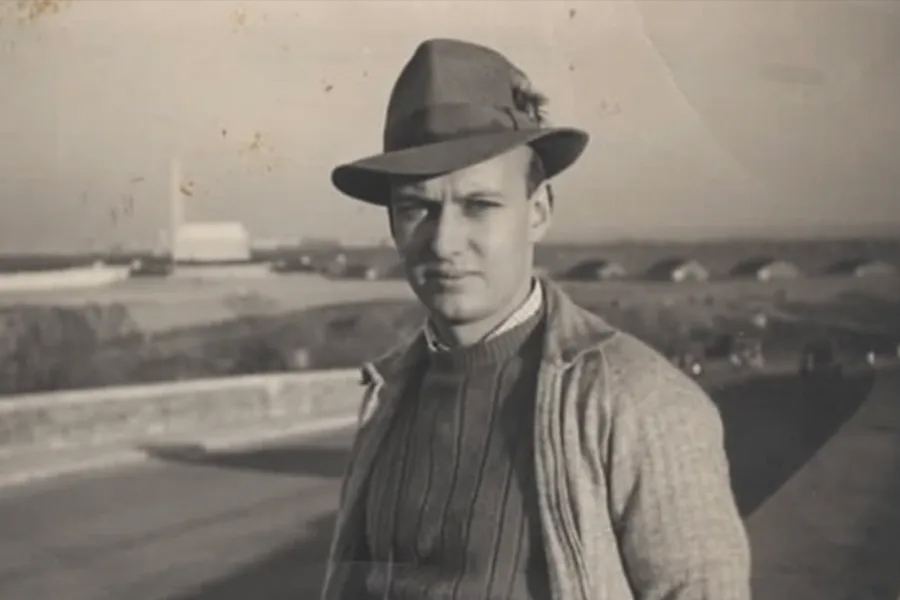
Edwin Darby Nye was born in Washington, D.C., in 1917. Some historical records list March 3 as his birth date, while others record May 3. He was the son of Luther Bertram Nye and Minnie Wheatley Farr, members of a family with deep American roots extending through several generations.
Growing up in the nation’s capital exposed him to a rapidly changing America. During his youth, the country experienced the aftermath of World War I, the Great Depression, and sweeping technological progress. Those years shaped a generation that learned resilience through necessity.
Although Edwin briefly enrolled in law school, he soon realized that legal work was not the path he wanted to follow. Rather than continue in that direction, he accepted work as a civilian contractor for the United States Navy. That decision would completely alter the course of his life.
The Journey to Wake Island
In July 1941, Edwin boarded the S.S. Mariposa in San Francisco and traveled across the Pacific Ocean to Wake Island. His assignment involved helping construct an airfield that would support American military operations.
Only a few months later, history changed forever.
Following the attack on Pearl Harbor on December 7, 1941, Japanese forces launched attacks across the Pacific. Wake Island endured repeated bombing before finally falling to Japanese troops. Edwin became one of many civilian contractors captured during the invasion.
What had begun as a construction assignment transformed into years of captivity.
Four Years as a Prisoner of War
Between late 1941 and 1945, Edwin was a prisoner of war for around 44 months. He spent those trying years in Japanese detention camps, including one in China.
The circumstances were really difficult. There wasn’t much food. There were no comforts. There were no trustworthy watches or clocks accessible. One could not take electricity for granted.
Even so, Edwin managed to come up with a workable solution.
He discovered how to gauge time by looking at the shadow a shovel handle made. The shadow served as his clock, much like a compass that uses just instinct to determine north. He developed a lifelong love with sundials as a result of that straightforward deed.
His experience showed a great deal of flexibility. Rather than giving in to despair, he found wisdom concealed in everyday sunlight.
Returning Home After World War II
With the end of World War II in 1945, Edwin finally returned home.
The transition from wartime captivity to civilian life was not simple, but he gradually rebuilt his future. Like many veterans, he focused on family, work, and creating stability after years of uncertainty.
One milestone came on December 29, 1945, when he married Jacqueline Blanche Jenkins.
Together they settled in the Washington, D.C., metropolitan area and began raising a family.
Jacqueline Jenkins Nye and Her Remarkable Career
Edwin’s wife possessed an equally impressive wartime story.
Jacqueline Blanche Jenkins, often called Jackie, served as a Navy codebreaker during World War II. She belonged to the group later known as the Goucher Girls, talented women recruited from Goucher College to assist American intelligence operations.
Her work involved decoding Japanese and German communications, including efforts connected with the famous Enigma encryption systems.
Outside her military service, Jacqueline enjoyed fashion and personal style while embracing professional achievement. She was often described as a very feminine feminist, balancing elegance with intellectual accomplishment.
Edwin and Jacqueline remained married for four decades before divorcing in Arlington, Virginia, in December 1985.
Raising the Nye Family
Edwin and Jacqueline raised at least three children.
| Family Member | Relationship | Notes |
|---|---|---|
| Edwin Darby Nye | Father | World War II veteran, advertising professional, sundial enthusiast |
| Jacqueline Blanche Jenkins Nye | Mother | Navy codebreaker during World War II |
| William Sanford Bill Nye | Son | Science educator and television personality |
| Edward Darby Nye Jr. | Son | Private family member |
| Susan Nye | Daughter | Private family member |
The household emphasized curiosity, education, and practical problem solving.
Bill Nye has frequently described his father as thoughtful, humorous, and endlessly interested in understanding how things worked. Those everyday conversations planted seeds that later blossomed into a career devoted to explaining science to millions.
A Career in Advertising
After the war, Edwin built a professional career in advertising and sales.
He eventually worked with First Financial Marketing Group in the Washington area as an advertising salesman. Although this career differed greatly from engineering or scientific research, it required communication skills, persistence, and relationship building.
His professional life reflected the steady rhythm of postwar America. Rather than seeking public attention, he focused on supporting his family and building a stable future.
A Lifelong Passion for Sundials
Sundials became one of Edwin’s numerous passions.
What started in a POW camp developed into decades of studying, creating, and researching timepieces from the past.
He wrote a book about sundials in Virginia and Maryland. He was granted honorary membership in the North American Sundial Appreciation Society due to his competence.
A sundial was much more than just a scientific tool to Edwin.
It represented survival.
Every shadow served as a reminder that nature still provides guidance even in the absence of technology. Sunlight makes time itself visible.
The Influence on Bill Nye
Perhaps Edwin’s greatest legacy can be seen through his son Bill Nye.
Bill often credits his father with encouraging curiosity and scientific thinking from an early age. Instead of simply providing answers, Edwin encouraged questions.
That approach became central to Bill Nye’s educational philosophy.
The influence extended beyond childhood conversations.
Years later, when NASA prepared the Mars Exploration Rover mission, Bill helped transform a planned camera calibration target into the famous MarsDial.
The small instrument served two purposes.
- It calibrated the rover cameras.
- It functioned as a working sundial on Mars.
The project honored Edwin’s lifelong fascination with sundials and reflected the lessons he learned while imprisoned during World War II. The phrase “Two worlds, One sun” beautifully connected Earth and Mars through the same sunlight that once helped Edwin measure time under impossible circumstances.
Personal Character
When I look across Edwin’s life, several qualities consistently stand out.
Resilience allowed him to survive nearly four years of captivity.
Curiosity transformed a survival technique into a lifelong academic passion.
Humility kept him grounded despite extraordinary experiences.
Dedication shaped both his family life and professional career.
His achievements rarely appeared in headlines, yet they echoed through the lives of those around him.
Final Years
In his senior years, Edwin continued to support scouting efforts, pursue his historical interests, and stay involved in the sundial enthusiast community.
He passed away from cardiopulmonary arrest in Arlington, Virginia, on August 23, 1997, at the age of 80.
He was laid to rest in Arlington National Cemetery, a fitting location for someone whose life had been significantly impacted by duty and sacrifice during the war.
His legacy lives on in family tales, historical documents, and the scientific curiosity he sparked in succeeding generations.
Family Tree Overview
| Generation | Family Members |
|---|---|
| Great Grandparents | Jonas Ward Nye and Mary Blogett |
| Grandparents | Luther Blogett Nye and Helen Sophia Puffer |
| Parents | Luther Bertram Nye and Minnie Wheatley Farr |
| Edwin D. Nye | Born 1917, died 1997 |
| Wife | Jacqueline Blanche Jenkins Nye |
| Children | Bill Nye, Edward Darby Nye Jr., Susan Nye |
FAQ
Who was Edwin D. Nye?
Edwin D. Nye, also called Ned Nye, was an American World War II prisoner of war, advertising professional, amateur historian, and sundial enthusiast. He is widely recognized as the father of television science educator Bill Nye.
Why is Edwin D. Nye remembered?
He is remembered for surviving approximately 44 months as a prisoner of war during World War II, developing a lifelong interest in sundials, and inspiring Bill Nye’s passion for science and curiosity.
How did Edwin D. Nye become interested in sundials?
During his imprisonment after the capture of Wake Island, he learned to estimate time by observing the shadow cast by a shovel handle because reliable clocks were unavailable. That experience sparked a lifelong fascination with sundials.
Who was Jacqueline Blanche Jenkins Nye?
Jacqueline Blanche Jenkins Nye was Edwin’s wife and a Navy codebreaker during World War II. She worked on Japanese and German military communications and later raised a family in the Washington, D.C., area.
How many children did Edwin D. Nye have?
Publicly available information identifies at least three children, including Bill Nye, Edward Darby Nye Jr., and Susan Nye.
What was Edwin D. Nye’s profession after World War II?
After returning from the war, he built a career in advertising and sales. He later worked with First Financial Marketing Group in the Washington metropolitan area.
What book did Edwin D. Nye write?
He wrote a book about the sundials of Maryland and Virginia, reflecting decades of personal study and historical interest in timekeeping.
How did Edwin D. Nye influence the Mars rover sundial?
His wartime experience inspired Bill Nye’s lifelong fascination with sundials. That influence eventually helped lead to the creation of the MarsDial carried aboard NASA’s Spirit and Opportunity rovers, connecting Edwin’s personal story with space exploration.
When did Edwin D. Nye pass away?
Edwin D. Nye died on August 23, 1997, at the age of 80 in Arlington, Virginia, and was buried at Arlington National Cemetery.