A Princess Born Into a Web of Noble Lines
Princess Theresa Of Leiningen stands at the meeting point of several powerful family histories. I see her life less as a single straight road and more as a braided river, fed by many tributaries: Leiningen, Oldenburg, Thyssen, and the wider circles connected to the Aga Khan family. Born in 1992 in Frankfurt am Main, she belongs to a family where titles, marriages, and inheritances have long shaped identity. Even her name carries the weight of lineage, like a crest stitched onto a banner.
Her public profile is not built on a conventional career path. Instead, it grows from family ties, social appearances, and the visibility that comes with being part of well known aristocratic and international circles. That makes her story especially interesting. She is not a celebrity in the modern sense, nor a private figure hidden from view. She is something more delicate and more old fashioned: a public daughter of a public family, moving through a world where names matter as much as deeds.
Her Parents and the Shape of Her Early World
Theresa is the daughter of Prince Karl Emich of Leiningen and Gabriele Renate Thyssen, later known as Inaara Aga Khan. That pairing alone places her in a remarkable social landscape. Her father comes from the House of Leiningen, while her mother connects her to the Thyssen family and later to the Aga Khan household. I think of this as a house with many windows. Each one opens onto a different tradition, a different public role, a different set of expectations.
Prince Karl Emich of Leiningen belongs to a German noble line with deep historical roots. He is a central figure in the Leiningen family, and his own life is marked by dynastic significance, marriages, and a public identity tied to noble heritage. Through him, Theresa is linked to the old German princely world, where family names often function like living archives.
Inaara Aga Khan, Theresa’s mother, brings another layer. She has been described as a German model, lawyer, and philanthropist, and her later marriage to Aga Khan IV tied Theresa into one of the best known international families. This means Theresa’s upbringing was not limited to one national or cultural frame. She was connected to European nobility, German industrial wealth, and a globally recognized Muslim princely family. That kind of background can feel like standing at a crossroads where every direction carries history.
Siblings, Half Siblings, and the Many Branches of the Family Tree
Theresa’s family is large enough to read like a map. Her maternal half-brother is Aly Muhammad Aga Khan, the son of Inaara Aga Khan and Aga Khan IV. Through him, Theresa shares a maternal line that extends into the Aga Khan family. She is also connected to siblings on her father’s side. Princess Cécilia Marie Stephanie Margarita of Leiningen is her paternal half-sister, and Prince Emich Albrecht Karl of Leiningen is her paternal half-brother.
These relationships matter because they show how her family is both singular and layered. Some families are an orchard with one kind of fruit. Hers is more like a grove with trees of different ages and origins, all growing close together. The result is a family identity that is rich but complex, with ties spreading across countries, social worlds, and generations.
Her maternal grandparents are Renate Thyssen-Henne and Helmut Friedhelm Homey. Renate Thyssen-Henne is especially notable because her name links Theresa to a family associated with industrial prominence and social visibility in Germany. On her father’s side, Theresa’s grandparents are Emich, 7th Prince of Leiningen, and Duchess Eilika of Oldenburg. That pair anchors her in two older noble houses and extends her lineage into the historical fabric of German aristocracy.
The names continue to unfold upward. Through her father, Theresa’s ancestry reaches into the houses of Leiningen, Oldenburg, Hohenlohe-Langenburg, Waldeck and Pyrmont, and the Russian imperial line. This is not just genealogy. It is a long corridor of memory, and every door along it opens into another chamber of European history.
Public Life, Social Circles, and Visible Appearances
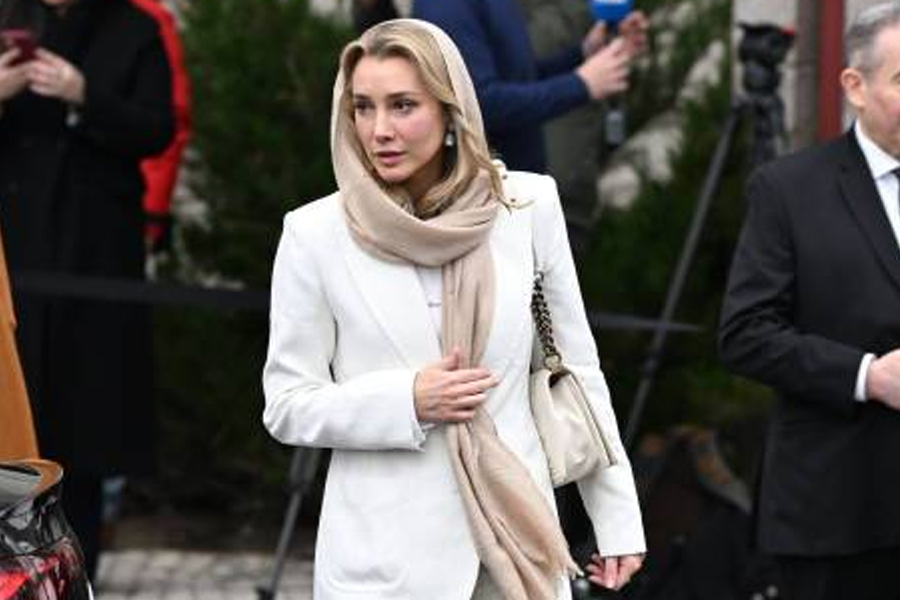
The public record of Theresa’s career is scarce. Absence says something. People gain public identity through office, writing, business, or action. Instead, Theresa attends cultural, philanthropic, and high society events. She appears at film festivals, charity dinners, opera seasons, and society events. Etiquette is a language and presence makes a statement here.
Public life can be as revealing as a career. It denotes someone who fits in elite social circles, where family reputation and personal flair count as much as professional rank. Theresa is regularly photographed with her mother and half-brother. That pattern confirms her public identity’s concentration on family.
Her appearances are also consistent. In the early 2000s, she was described as a child first using the internet. Later, she appears in 2012, 2017, 2019, 2020, 2022, and 2025 key event photos. The timeline feels like stepping stones across a river, indicating each adulthood stage while the family frame remains constant.
Recent Visibility and the Quiet Power of Recognition
Theresa has appeared in recent family events, including Aga Khan IV’s 2025 funeral. Her appearance puts her in one of the world’s most famous religious and dynastic lineages. She is involved even without a governmental office. Presentness becomes participation.
That is quietly strong. Public figures shout. Others just show up. Theresa appears to be second. Instead of interviews or personal words, her name appears in event captions, family photos, and social mentions. She is visible but not overexposed. That balance gives her restraint, like polished silver that only catches light when the room turns.
The Family Members at a Glance
| Family member | Relationship to Theresa | Notable identity |
|---|---|---|
| Prince Karl Emich of Leiningen | Father | Member of the House of Leiningen |
| Inaara Aga Khan | Mother | German born social figure, lawyer, philanthropist |
| Aly Muhammad Aga Khan | Maternal half-brother | Son of Inaara Aga Khan and Aga Khan IV |
| Princess Cécilia of Leiningen | Paternal half-sister | Daughter of Karl Emich and his first wife |
| Prince Emich Albrecht Karl of Leiningen | Paternal half-brother | Younger son of Karl Emich |
| Renate Thyssen-Henne | Maternal grandmother | Connected to the Thyssen family |
| Helmut Friedhelm Homey | Maternal grandfather | Theresa’s maternal grandfather |
| Emich, 7th Prince of Leiningen | Paternal grandfather | Head of the Leiningen line |
| Duchess Eilika of Oldenburg | Paternal grandmother | Oldenburg noble house |
| Wider ancestral houses | Extended lineage | Leiningen, Oldenburg, Russian imperial line, and more |
FAQ
Who is Princess Theresa Of Leiningen?
Princess Theresa Of Leiningen is a German born noblewoman connected to the House of Leiningen through her father and to the Aga Khan family through her mother. Her identity is deeply shaped by family lineage, public appearances, and aristocratic social circles.
Who are Princess Theresa Of Leiningen’s parents?
Her parents are Prince Karl Emich of Leiningen and Gabriele Renate Thyssen, later known as Inaara Aga Khan. Their backgrounds connect Theresa to European nobility, German industrial heritage, and the Aga Khan family.
Does Princess Theresa Of Leiningen have siblings?
Yes. She has a maternal half-brother, Aly Muhammad Aga Khan, and paternal half-siblings including Princess Cécilia Marie Stephanie Margarita of Leiningen and Prince Emich Albrecht Karl of Leiningen.
What is known about her career?
There is no widely documented independent professional career in the public record. Her visibility comes mainly from family connections and appearances at cultural and charitable events.
Why is her family important?
Her family connects several notable lines, including Leiningen, Oldenburg, Thyssen, and the Aga Khan family. That makes her biography both aristocratic and internationally connected, with roots that stretch across Europe and beyond.